
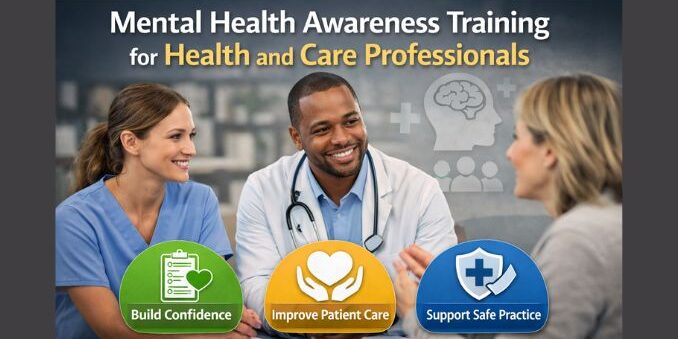
Friday, February 6th is Time to Talk Day, a day to encourage conversations about mental health and make a positive difference to people’s lives. Mental Health Awareness Training for Health and Care Professionals is an essential skill that supports carers in their day-to-day work with patients.
When we notice that someone may be struggling with their mental health — whether due to bereavement, separation, illness, or ongoing stress — it can feel difficult to know what to do. Many of us worry about saying the wrong thing or making the situation worse. However, choosing to acknowledge someone’s struggle and asking how they are can be a powerful first step in showing care and support.
Listening Without Labels
It can be tempting to try to explain what someone is experiencing or to search for a diagnosis. However, mental health conditions are complex and diagnosing should always be left to professionals. What matters most in the moment is staying with the person’s feelings — listening, validating their experience and offering support without judgement or labels.
The Importance of Active Listening
Active listening in healthcare is more than hearing words. It involves giving someone space to talk, allowing them to lead the conversation and resisting the urge to interrupt or “fix” the problem. Actions such as nodding, reflecting back what someone has said and showing empathy help people feel heard, respected and understood.
Communicating in Different Ways
While face-to-face conversations are valuable, they are not always possible or comfortable for everyone. Phone calls, video chats, text messages, or emails can all provide meaningful opportunities to connect. What matters most is keeping communication open and letting the person know they are not alone.
Respecting Readiness and Boundaries
Not everyone feels ready to talk about their mental health. Timing is important and pushing a conversation too soon can sometimes have the opposite effect. If someone is not ready, it is important to respect that choice while reassuring them that support remains available whenever they feel able to reach out.
Why Training Matters
For those working in health, care, and wellbeing settings, understanding mental health and learning disabilities is essential to providing safe, compassionate and person-centred care. Mental health awareness training for health care workers supports professionals to understand individual needs, create effective care plans, respect rights and autonomy, recognise the impact of medication and follow NICE guidance when responding to behavioural challenges.
By supporting mental health in care settings, building knowledge, confidence and empathy, we are better equipped to support those in our care. Get ready to start conversations that can make a real difference.
References:
NICE UK – https://www.nice.org.uk