
For patients who are experiencing persistent itching, redness or unexplained skin irritation, trying to work out the actual cause can be frustrating. A rash that keeps returning despite treatment often indicates allergic contact dermatitis, a condition caused when the skin is exposed to certain substances.
Patch testing for nurses is important when you need to investigate these reactions; patch tests help to diagnose accurately and help patients understand how to manage these recurring skin conditions.
But what does patch testing involve, and why is specialist knowledge important in everyday nursing practice?
What Is Patch Testing and Why Is It Important?
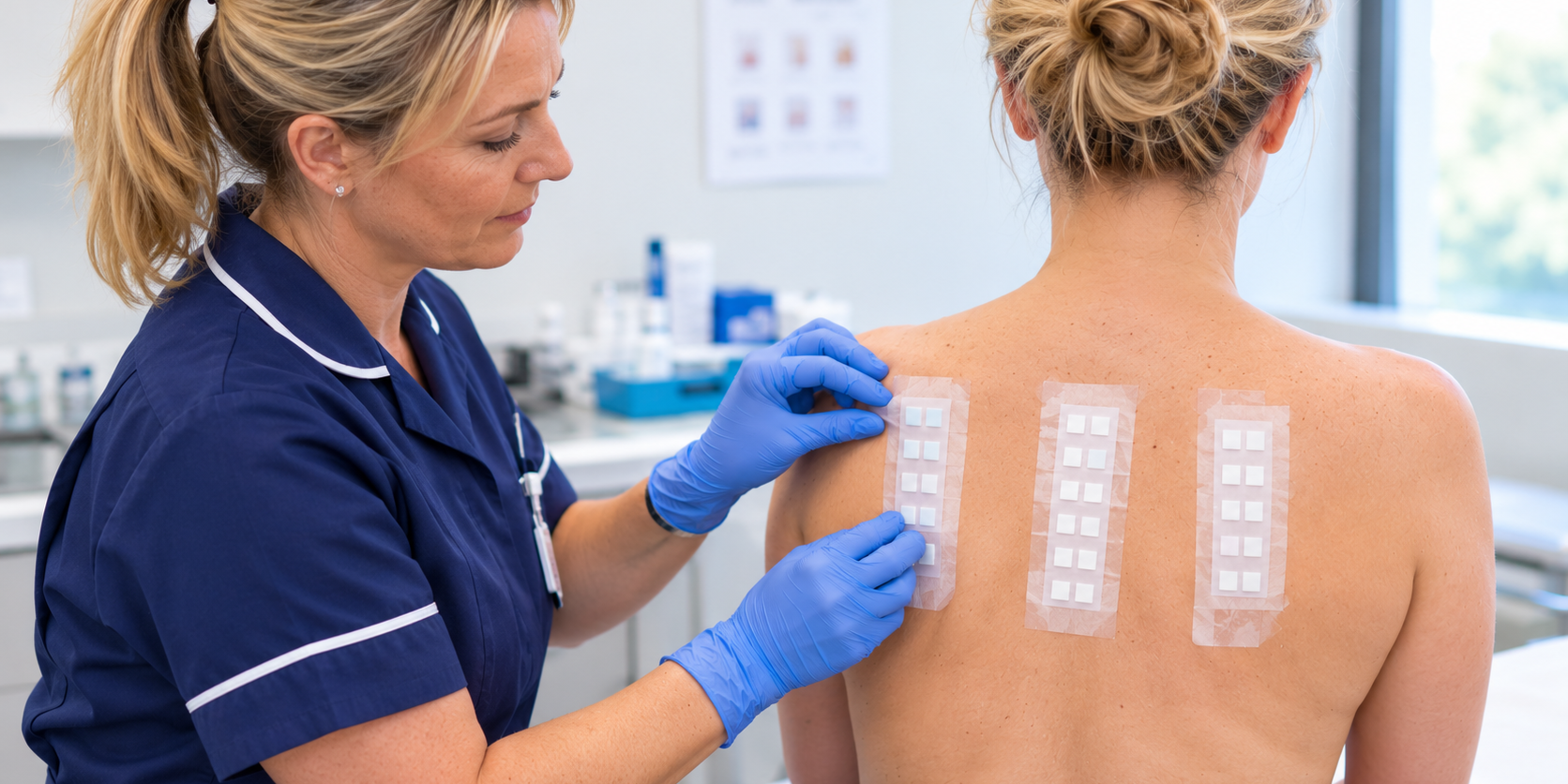
Patch testing is a clinical investigation used to identify which substances are responsible for allergic contact dermatitis.
Unlike skin prick testing, which is used to investigate immediate allergic reactions, patch testing identifies delayed hypersensitivity reactions that could develop over several days.
Common allergens include:
- Nickel and other metals
- Fragrances and cosmetic ingredients
- Preservatives in skincare products
- Rubber chemicals
- Hair dyes and workplace substances
Small quantities of allergens are put on the patient’s skin, usually their back, using specially designed chambers. Reactions are generally assessed after 48 hours, often followed by a further assessment after 96 hours and even longer in some cases. Understanding this process is essential for nurses supporting dermatology services.
Scenario 1: The Healthcare Worker With Persistent Hand Eczema
A healthcare assistant is experiencing painful, cracked hands despite regularly using moisturisers and prescribed treatments. Initially, the cause is assumed to be frequent handwashing. However, symptoms continue even after changes to their skincare routine.
A dermatology referral leads to patch testing. The investigation finds an allergy to a rubber chemical, found in certain protective gloves, is to blame. With the right clinical advice, the healthcare assistant can source suitable alternatives and reduce exposure.
The nursing lesson: Not all occupational hand dermatitis is caused by irritation alone.
Nurses should recognise the difference between irritant and allergic contact dermatitis, while understanding that both conditions can coexist.
Scenario 2: The Patient Whose Facial Rash Keeps Returning
A 42-year-old patient suffers with recurring redness and itching around their eyelids. They have tried many different skincare products, believing sensitive skin is responsible.
At their assessment, a nurse asks about cosmetics, hair products, fragrances and occupational exposures. Patch testing identifies an allergy to a preservative present in one of their regularly used products. This example demonstrates why knowing patient history matters.
The nursing lesson: Effective patch testing begins before the patches are applied.
Understanding a patient’s lifestyle, occupation, skincare habits and reaction history helps the clinical team select the right allergens and interpret findings.
Scenario 3: When Patch Testing Results Are Negative
A patient with persistent eczema undergoes patch testing, but no relevant allergic reactions are identified. They are disappointed, thinking the investigation has achieved nothing. However, negative results still provide informative clinical information.
They may help prove that allergic contact dermatitis is less likely and encourage investigation of other explanations, including irritant dermatitis or eczema.
The nursing lesson: Nurses play an important role in explaining results clearly also in reassuring patients that negative findings can also help.
How Can Nurses Support Safe Patch Testing?
Successful patch testing needs good preparation, accurate documentation and effective communication.
1. Patient Assessment – Before testing, nurses should review medical history, current medications, existing skin conditions and potential exposures. Certain treatments or skin conditions may have an effect on test suitability or interpretation.
2. Correct Application and Documentation – Allergens must be prepared and applied according to your organisation’s clinical protocols. Correct skin marking and documentation make sure reactions are linked to the right substances.
3. Patient Education – Patients should understand how to protect the testing area. They must avoid excessive sweating, keep patches dry and prevent them from becoming dislodged.
4. Recognising Skin Reactions – Nurses involved in readings should have the right training to recognise and document reactions. Redness, swelling and small blisters could mean a positive response, but clinical interpretation needs specialist knowledge.
5. Supporting Follow-Up Care – Identifying an allergen is only the beginning. Patients may need to know that they should read ingredient labels, become familiar with alternative product names and avoid relevant exposures.
Why Is Patch Testing Training Important for Nurses?
Patch testing involves more than just applying adhesive chambers. It needs an understanding of delayed allergic reactions, patient assessment, infection prevention, documentation and professional responsibilities.
For nurses entering dermatology services, structured learning can strengthen theoretical knowledge so they are able to support supervised clinical development. Continuing professional development also includes reflective practice and helps nurses know when specialist advice is required.
Interactive Healthcare Training offers an online Patch Testing Training for Nurses course, covering patient preparation, allergen application, reaction grading, documentation and patient safety. Online learning supports clinical knowledge development but does not replace supervised practical training or workplace competency assessment.
External references
See the links below for further information:
- British Association of Dermatologists – Patch Testing — patient information and clinical procedures
- NHS – Contact Dermatitis Diagnosis — diagnosis and investigation
- British Dermatological Nursing Group – Patch Testing Best Practice Guide — nursing practice and standards
Frequently Asked Questions About Patch Testing
How long does patch testing take?
Patches normally stay attached for 48 hours. Further readings will often be taken around day four, although some patients do need additional appointments.
Is patch testing painful?
Patch testing is usually well tolerated; however, because of the nature of what is being tested, there may be some itching, redness or discomfort if the patient has a reaction.
Can patch testing identify food allergies?
No. Standard patch testing only investigates delayed contact allergies rather than immediate food allergies.
Can nurses perform patch testing?
Properly trained nurses can do patch testing activities within their professional competence, subject to local clinical protocols and supervision arrangements.