
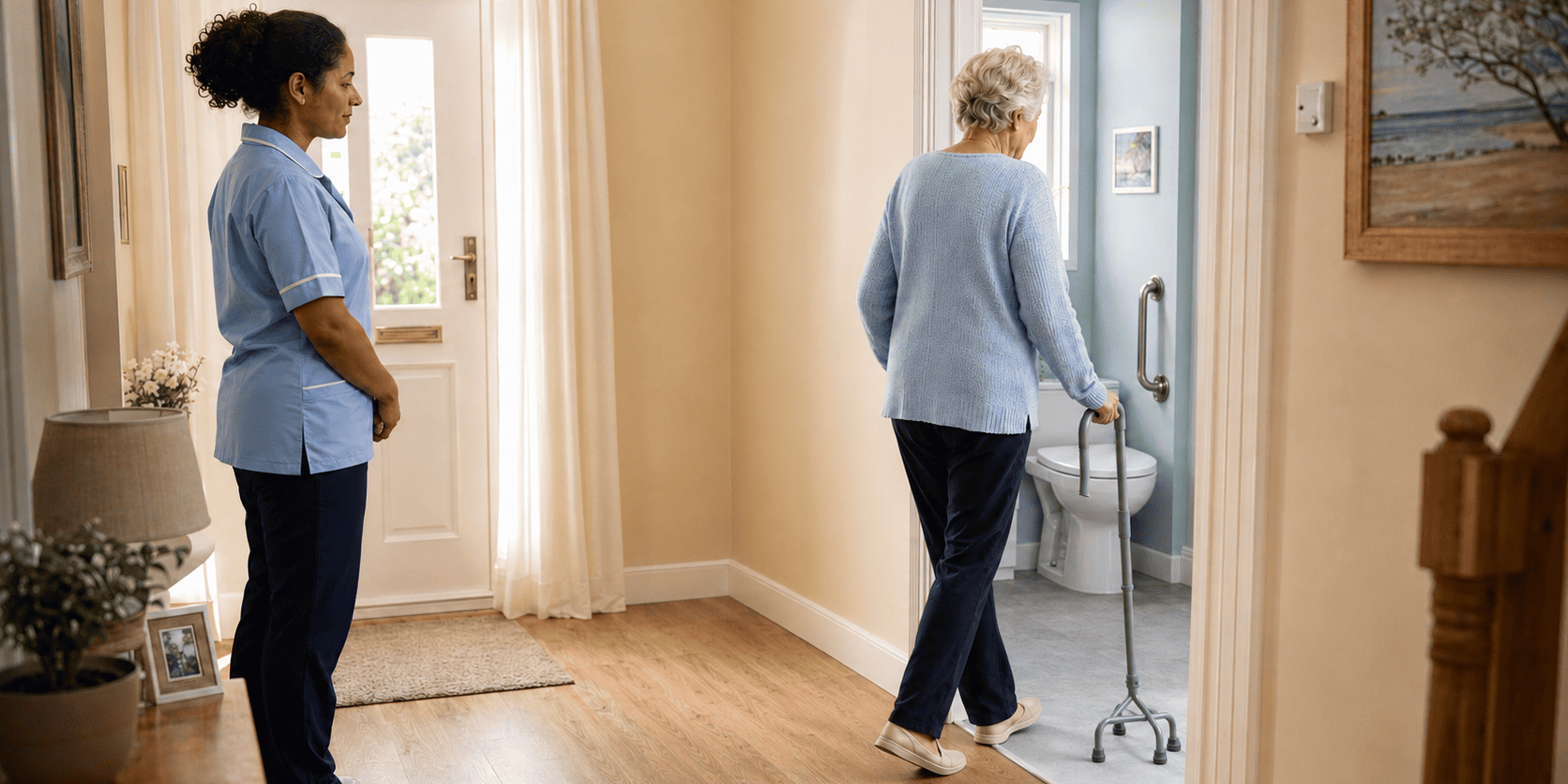
When someone returns home after an illness or hospital stay, the right support can make the difference between long-term dependence and independence. Reablement Training for Health and Social Care Teams gives professionals the knowledge and skills to help people remaster day-to-day skills and build their confidence.
Interactive Healthcare Training’s online Reablement course teaches learners how short-term support can help individuals do more for themselves, rather than doing tasks on a person’s behalf. Reablement is working with individuals, helping them to achieve goals and ultimately improve their quality of life.
What is reablement in health and social care?
Reablement in health and social care is a strengths-based approach that helps people to regain or maintain the skills they need for daily living, usually following a hospital stay, an illness, injury or a decline in mobility.
Support may include helping an individual to:
- Wash, dress and prepare simple meals themselves
- Safely move around their house
- Make sure they are able to use aids and adaptations or equipment confidently
- Keep up with routines and social connections
- Help them achieve their recovery goals
- Minimise or delay the need for ongoing care
Traditional models may focus on doing things for someone, person-centred reablement shows how professionals can do daily tasks with them. The aim is not to completely reduce care, but to provide a level of support while promoting autonomy, dignity and choice.
Why reablement training for health and social care teams is important
Good reablement needs more than good intentions. Staff need to understand how to assess ability, agree realistic goals, manage personal risk, discuss progress and know when a concern needs to be addressed.
High-quality reablement training for care workers helps create a consistent approach across a service. It means staff can safely balance positive risk-taking, encourage participation without taking over and recognise progress that may otherwise go unnoticed.
For care providers and healthcare decision-makers, training can also support:
- Competent and capable teams
- Consistent person-centred care
- Effective communication between professionals and carers
- Clearer record keeping and accountability
- Better experiences for service users
- More focus on independence and measurable outcomes
What does Interactive Healthcare Training’s Reablement course cover?
The online course from Interactive Healthcare Training takes learners through the principles and practical application of reablement. Learners will have a clear understanding of what reablement is, how it differs from traditional home care and where it fits within intermediate care. The course demonstrates how short-term support can prepare people for day-to-day life after intermediate care.
Person-centred principles
The training examines autonomy, choice, the roles of the reablement worker and of formal and informal carers. Learners will understand why support should be built around what matters to each person—not just what service can be provided.
Assessment and goal-setting
Reablement assessment and goal-setting turns long-term ambition into small achievable steps. Learners consider care plans, activities of daily living (ADLs), individual involvement and coordination across different tasks.
Practical support strategies
The course highlights dignity, respect, social inclusion, aids and equipment, boundaries, scope of practice and escalation. Case studies connect key principles with situations they may encounter at work.
Communication, coordination and exit planning
Reablement often involves the individual, relatives, care workers and a multidisciplinary team. Learners explore effective questioning, record keeping, accessible practice, equality and exit planning.
Measuring success and reflective practice
Progress is not always a big transformation. It could just be an individual preparing part of a meal, walking safely to another room or resuming a familiar routine. The training considers key indicators, service improvement and reflective practice so staff are able to recognise outcomes and learn from experience.
Who should complete reablement training?
The course is relevant to professionals who support adults to regain or maintain their independence, including:
- Reablement workers
- Domiciliary care workers
- Healthcare assistants
- Support workers
- Adult social care staff
- Rehabilitation and intermediate-care teams
- Team leaders, supervisors and care coordinators
- Managers responsible for service quality and workforce development
What are the benefits of online reablement training?
Online reablement training offers a practical way to build workforce knowledge without requiring every employee to attend a live classroom session; organisations can incorporate the course into induction, continuing professional development or wider learning plans.
For organisations, this creates a scalable route to strengthening knowledge across different roles, locations and shift patterns.
Turn everyday support into lasting independence
Reablement is about seeing ability rather than limitation. When staff understand how to set meaningful goals, encourage service users and coordinate support, everyday care interactions become opportunities for better progress.
A Reablement training course helps professionals build the knowledge needed to deliver safe, respectful and outcomes-focused support. It is a valuable investment for organisations seeking to strengthen staff reablement skills, promote independence and encourage person-centred practice across their workforce.
Explore the Reablement course from Interactive Healthcare Training